Dead Forest
Dead Forest (Uatumã River, Amazonia, 2009) confronts the viewer with a territory that physically exists but has functionally disappeared. Filmed in the heart of the Brazilian Amazon, this flooded landscape was once the ancestral homeland of the Waimiri-Atroari indigenous communities, who were forced to displace forty years ago when the government authorized the construction of the Balbina Hydroelectric Dam to supply energy to Manaus. The resulting artificial lake—the largest in Latin America—submerged a vast expanse of the rainforest, leaving behind a ghost landscape of dead, standing trunks.
In this context of a devastated-earth policy, the installation strips away any idyllic representation of the Amazon, transforming the flooded forest into a poignant symbol of corporate displacement and ecological trauma.
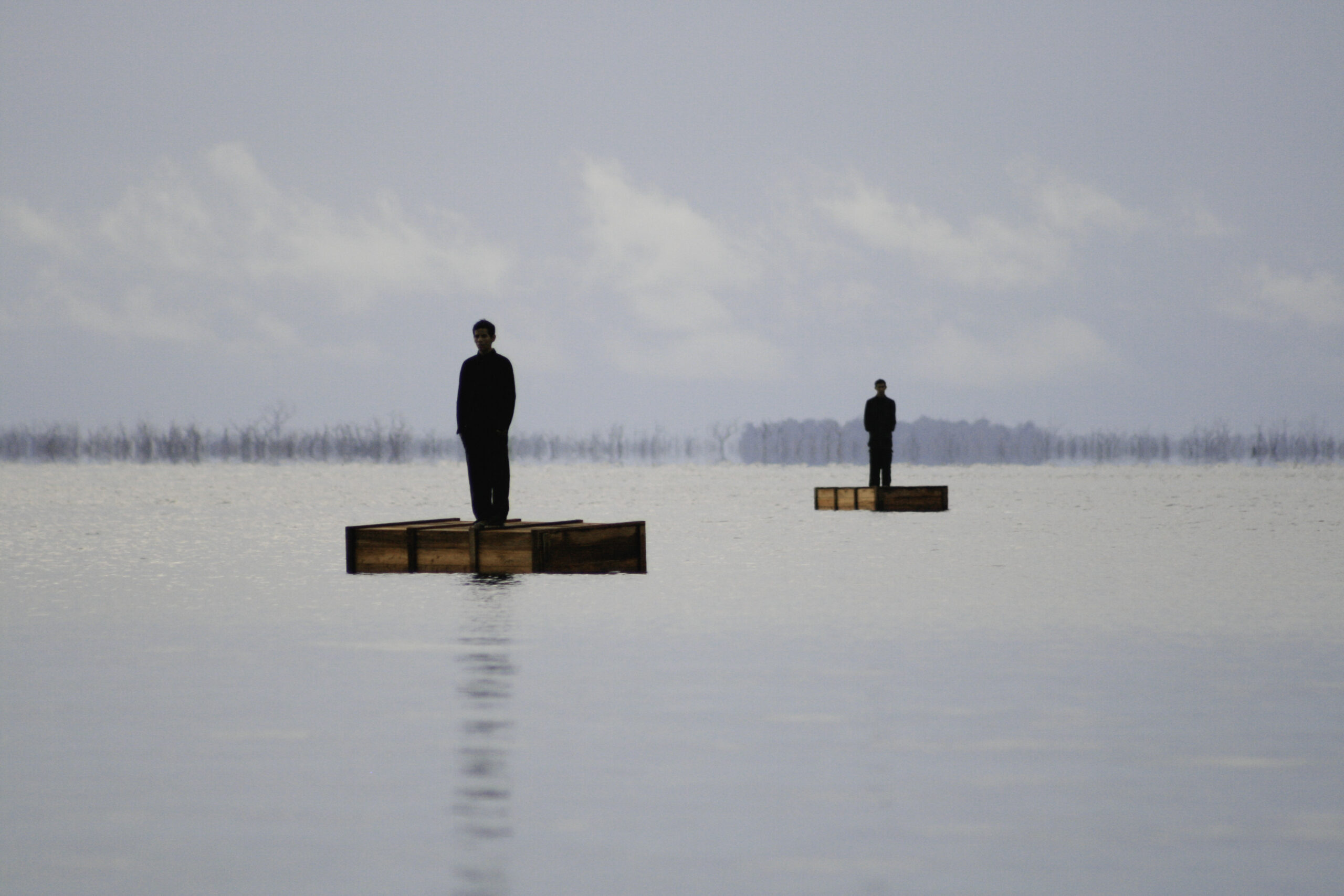
Dead Forest #5830, Inkjet Print, 150 cm x 220 cm
Uatumã River, Amazonia, 2009
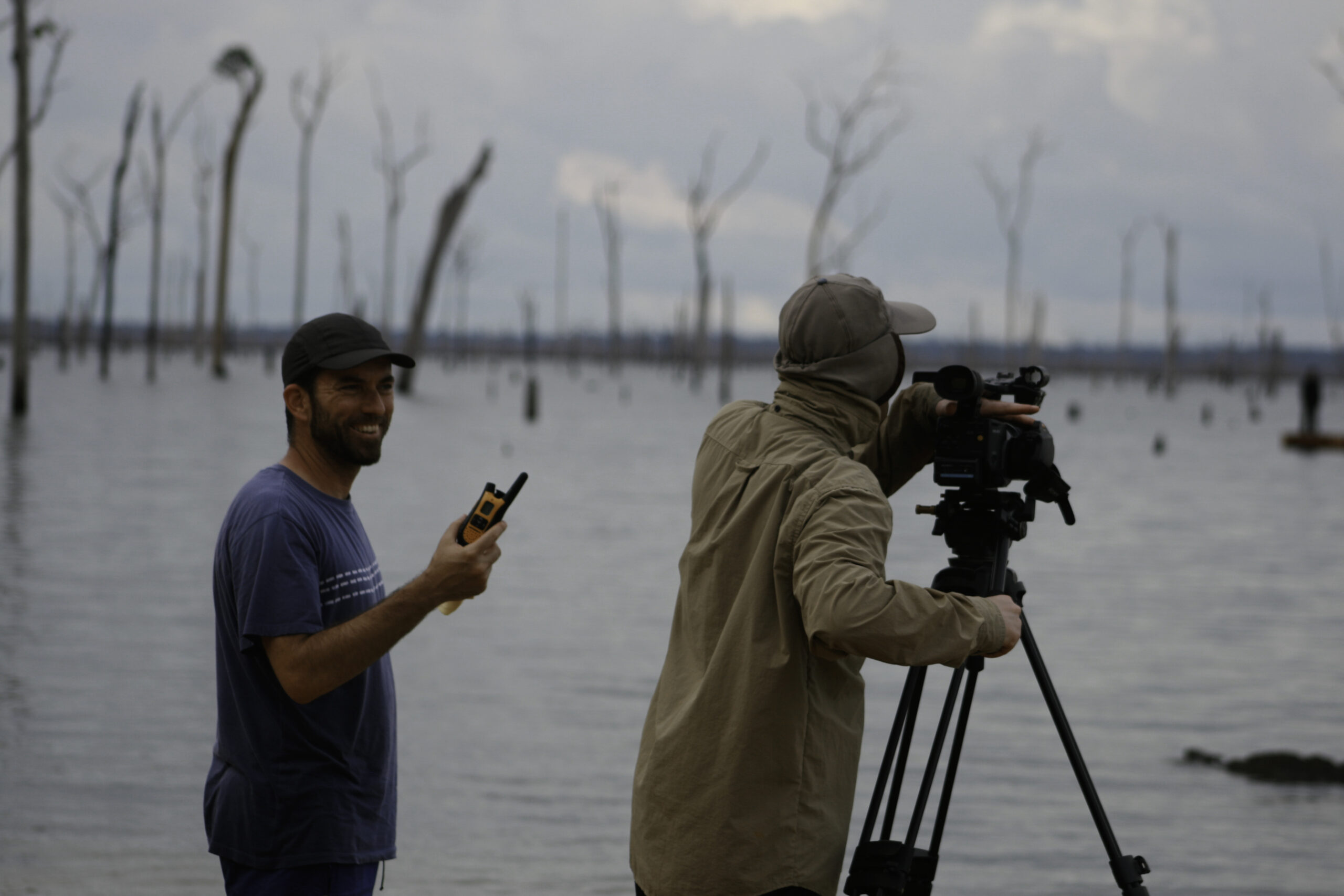
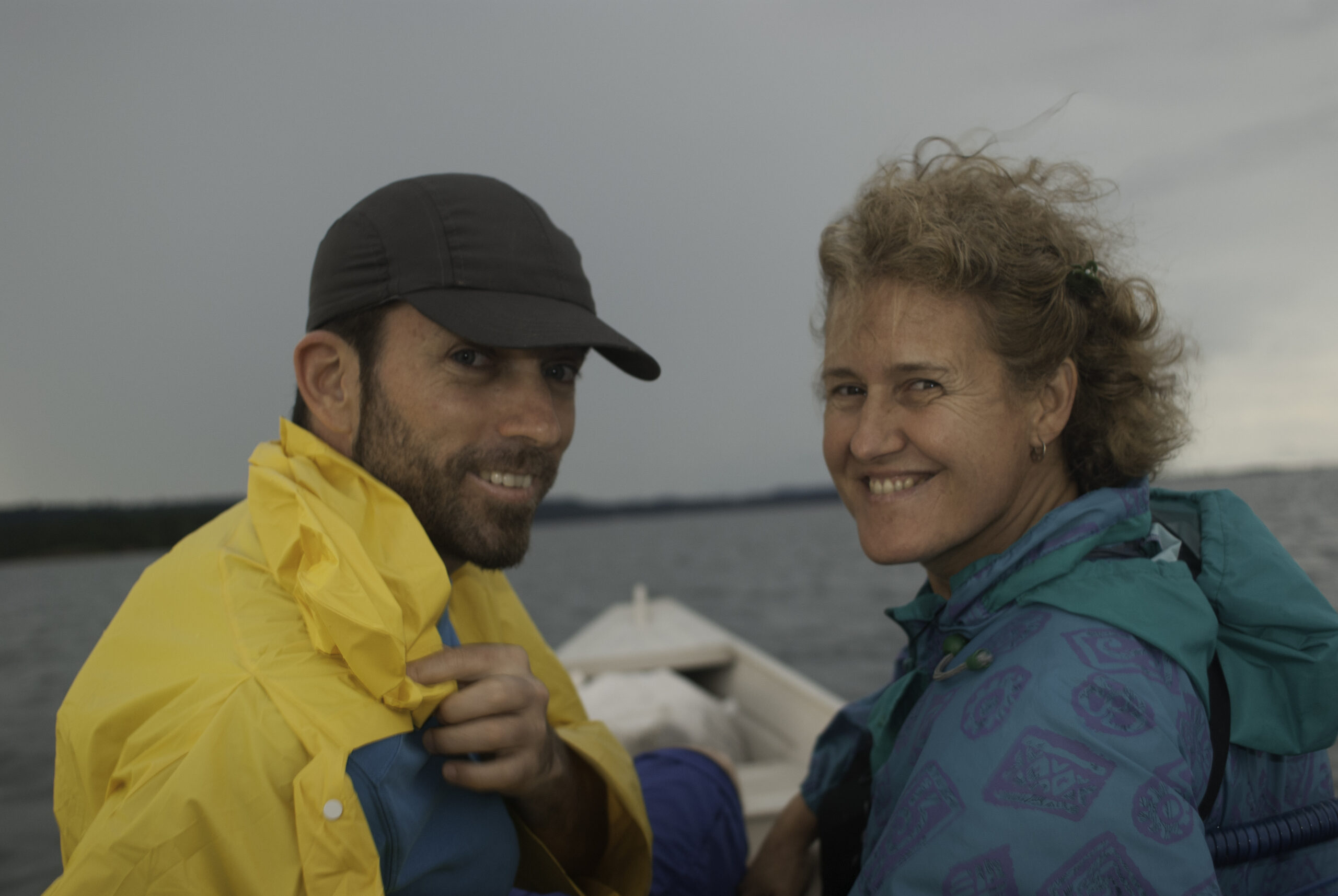
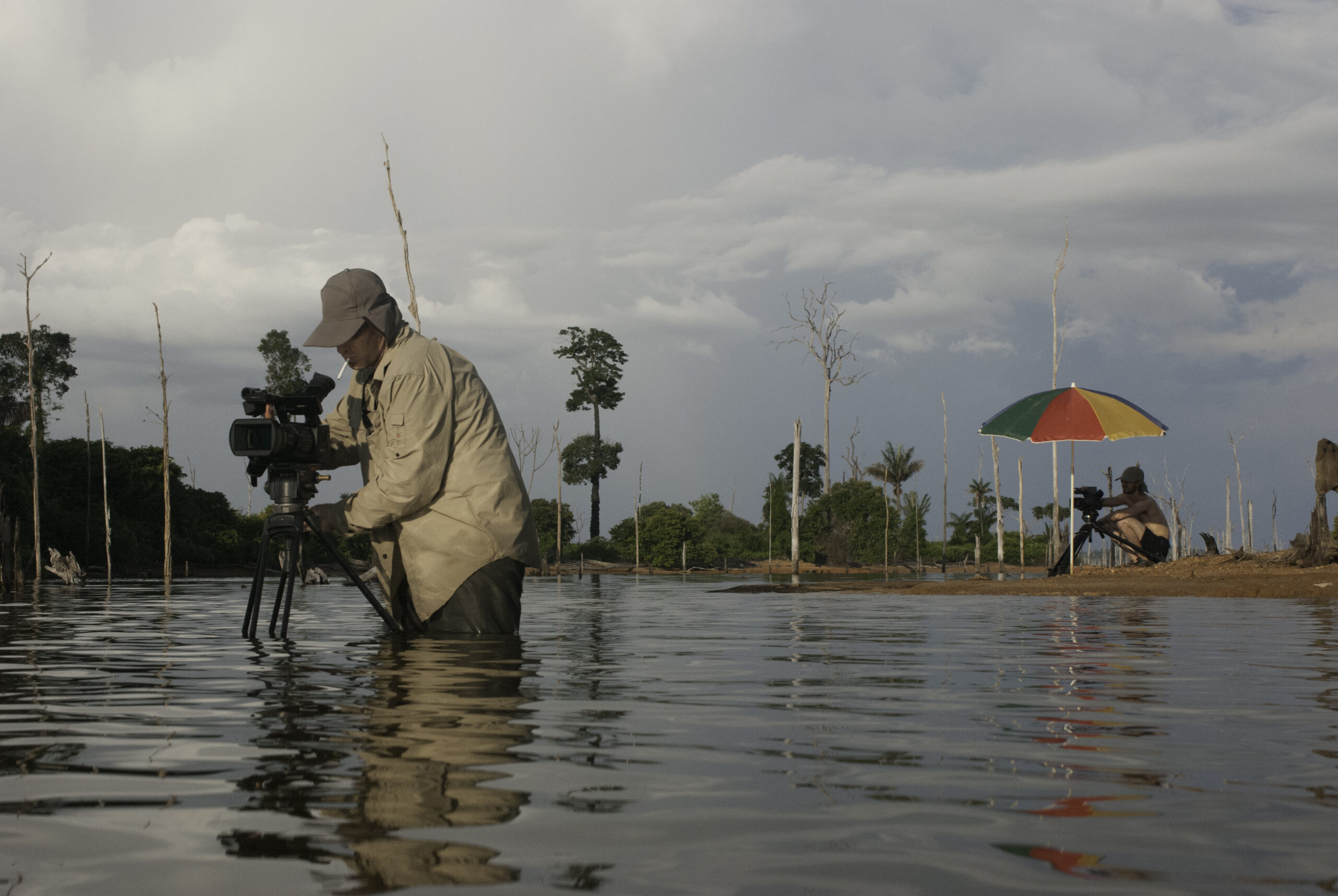
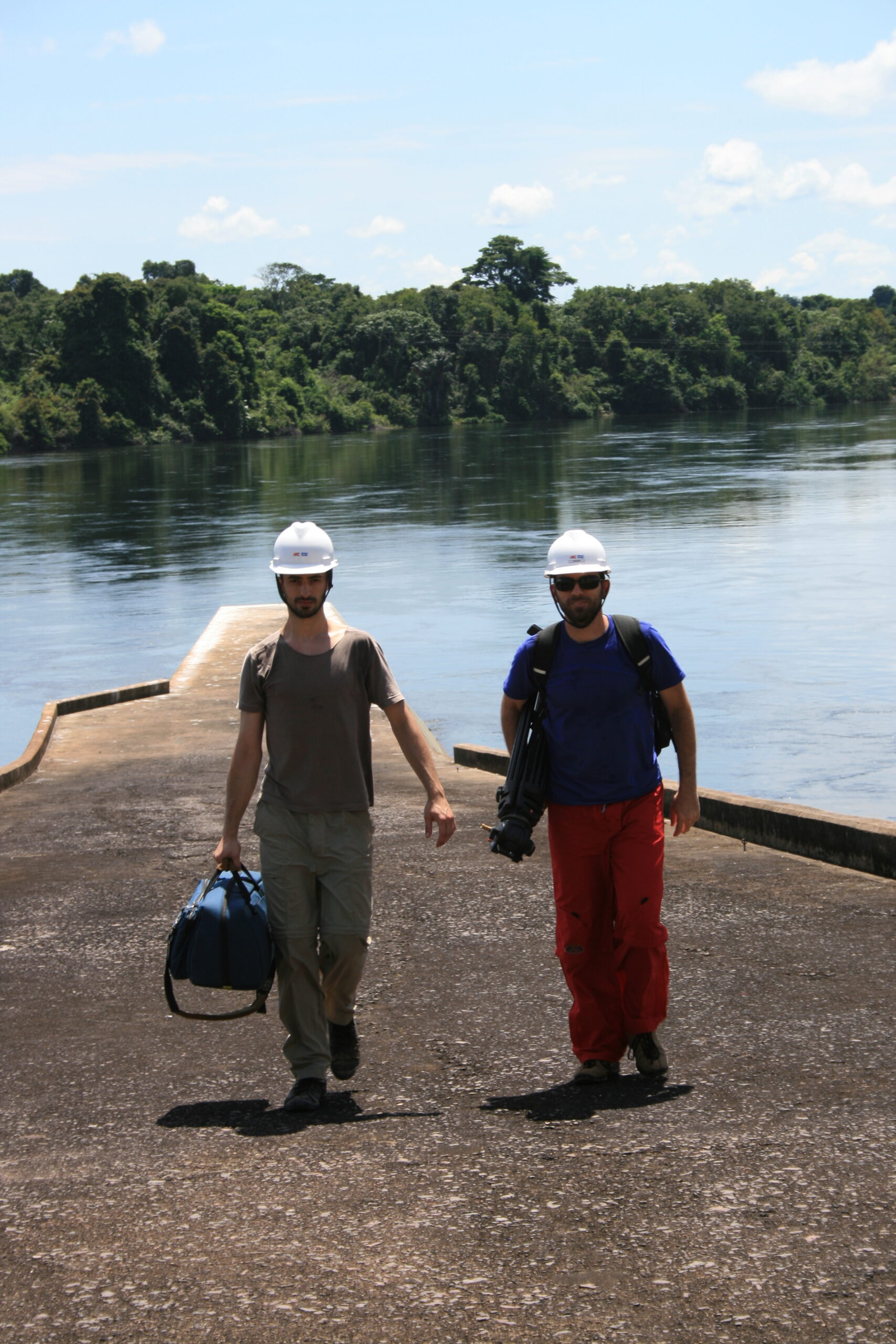
Working Process & Community Metaphor
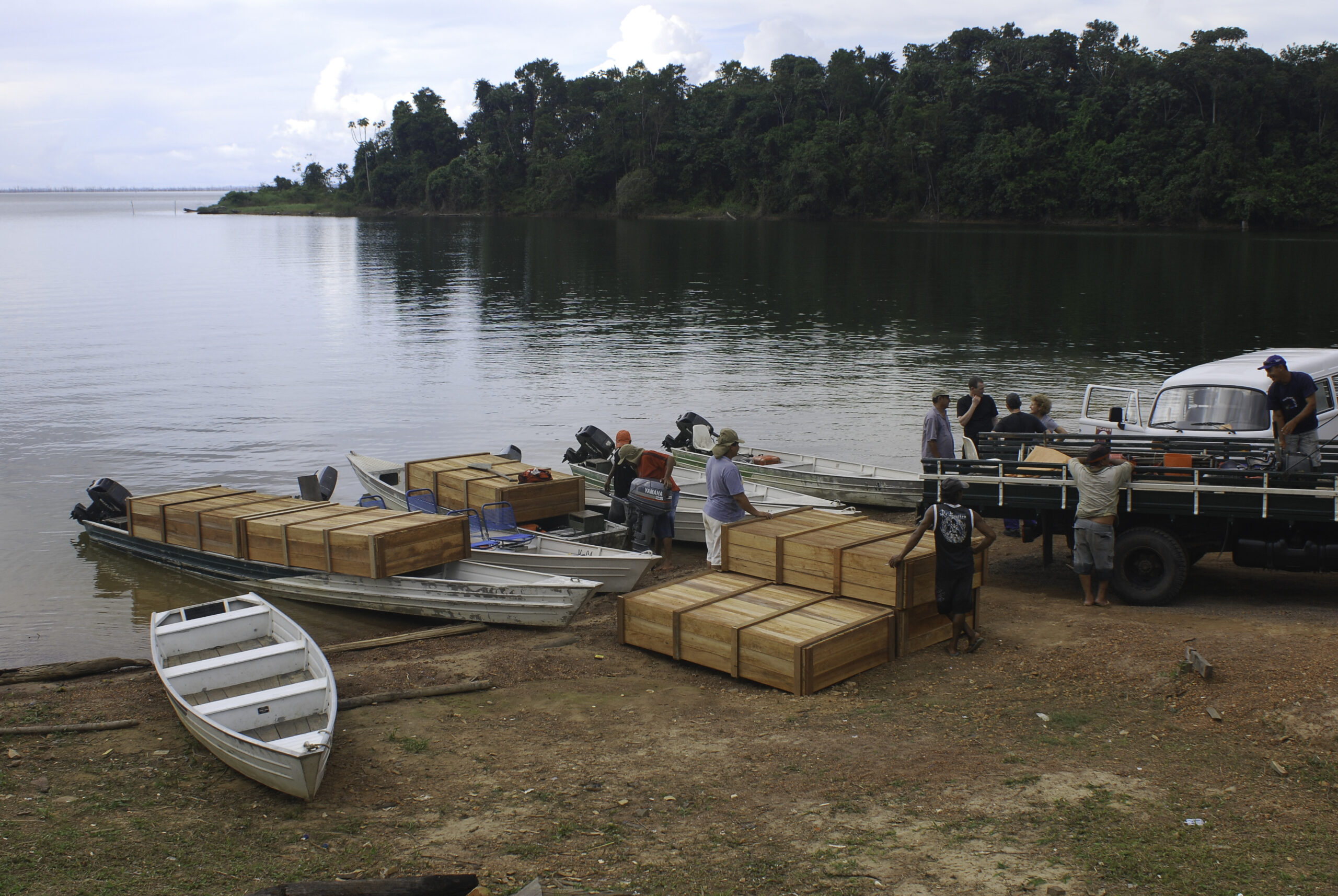
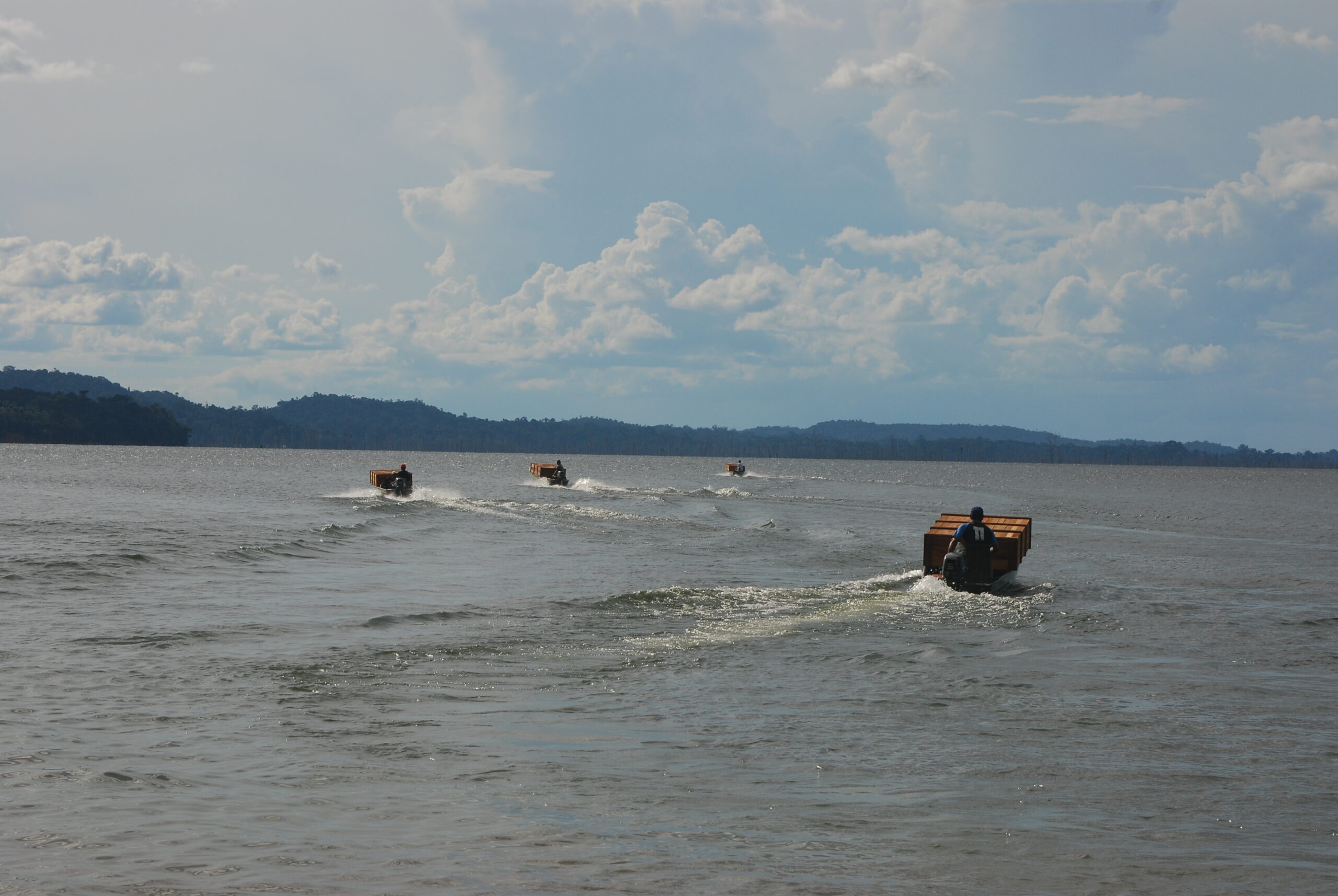
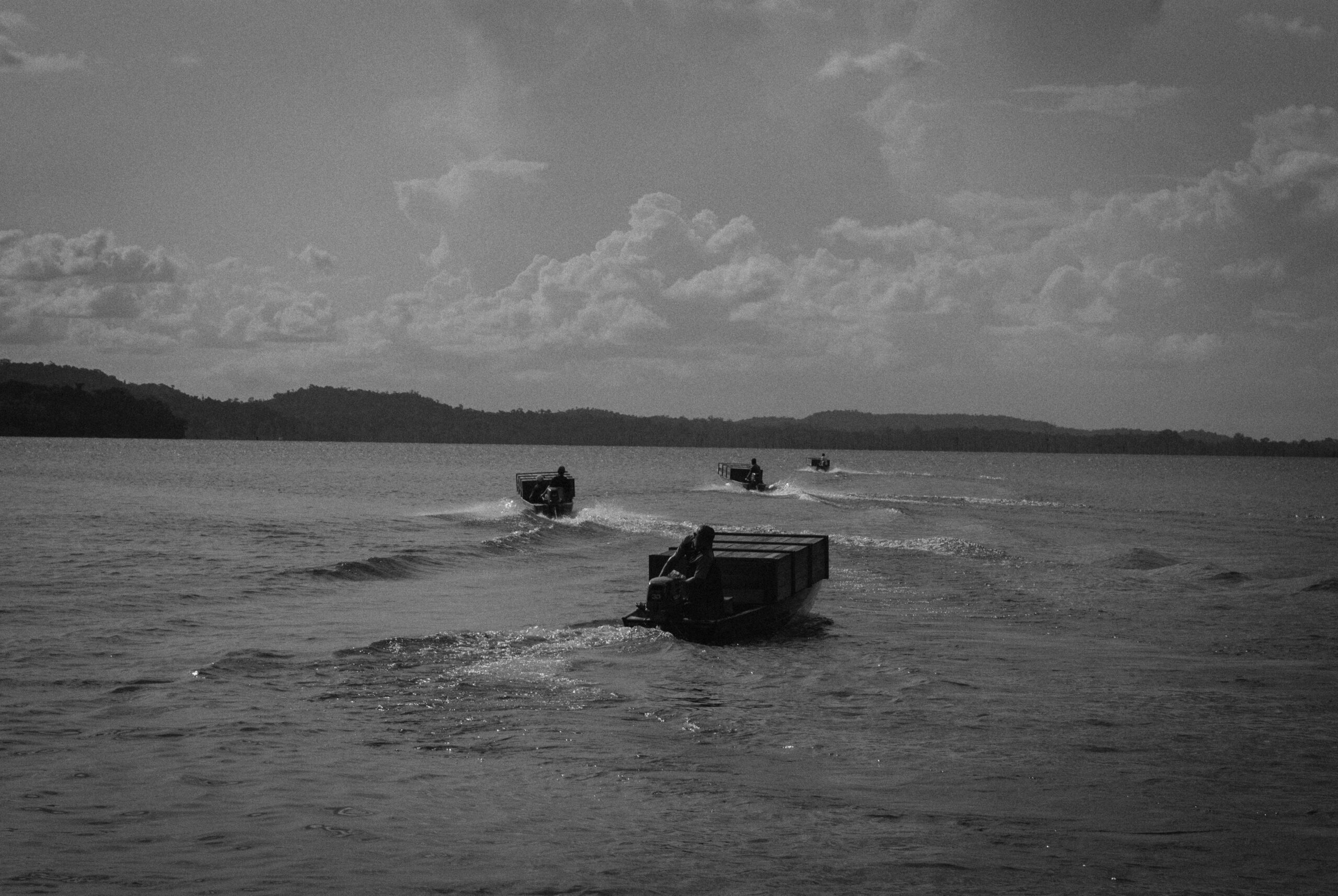
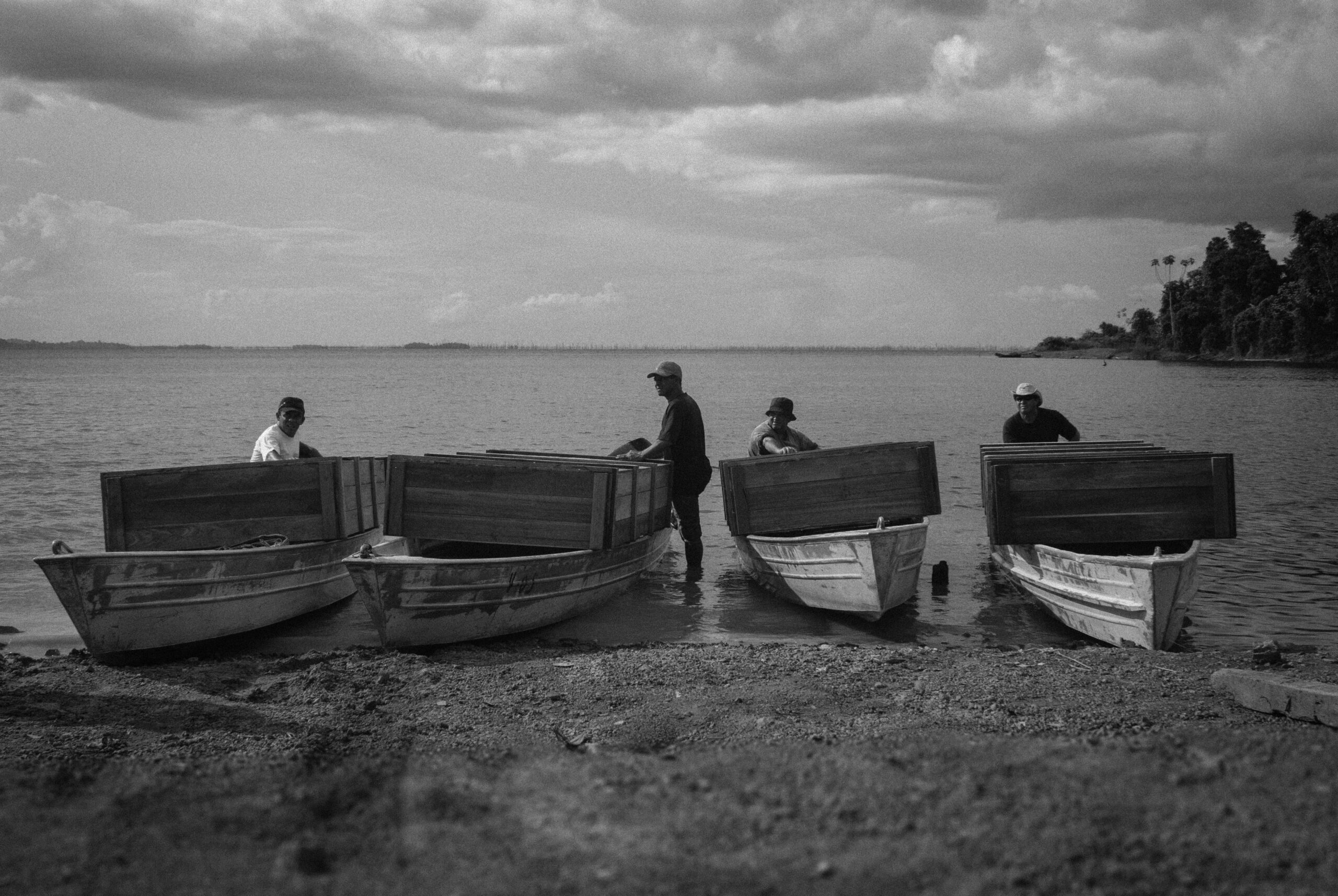
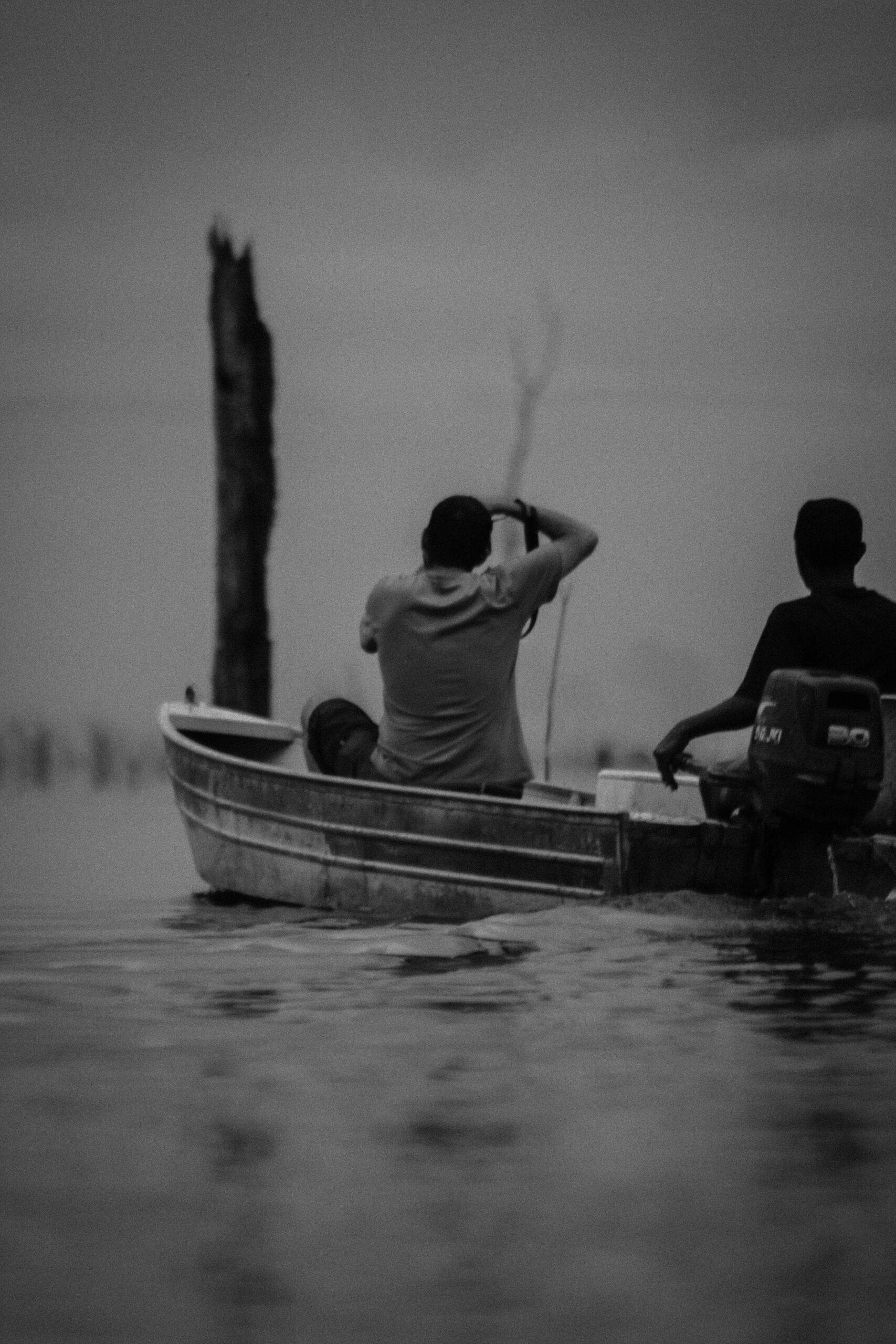
A fundamental pillar of the project’s development was the close collaboration with local fishermen from the affected communities. The core action of the piece shows these displaced inhabitants floating atop semi-sunken wooden boxes amidst the dead trees—a visceral metaphor for survival and precarious resistance within an ecosystem broken by human engineering. Left entirely to an uncertain drift under an oncoming tempest, the human bodies stand as silent witnesses to the catastrophe.
The production process captured the violent dynamics of the water as it collides and bounces against itself, balancing the raw physical vulnerability of the participants with the monumental indifference of the man-made environment.
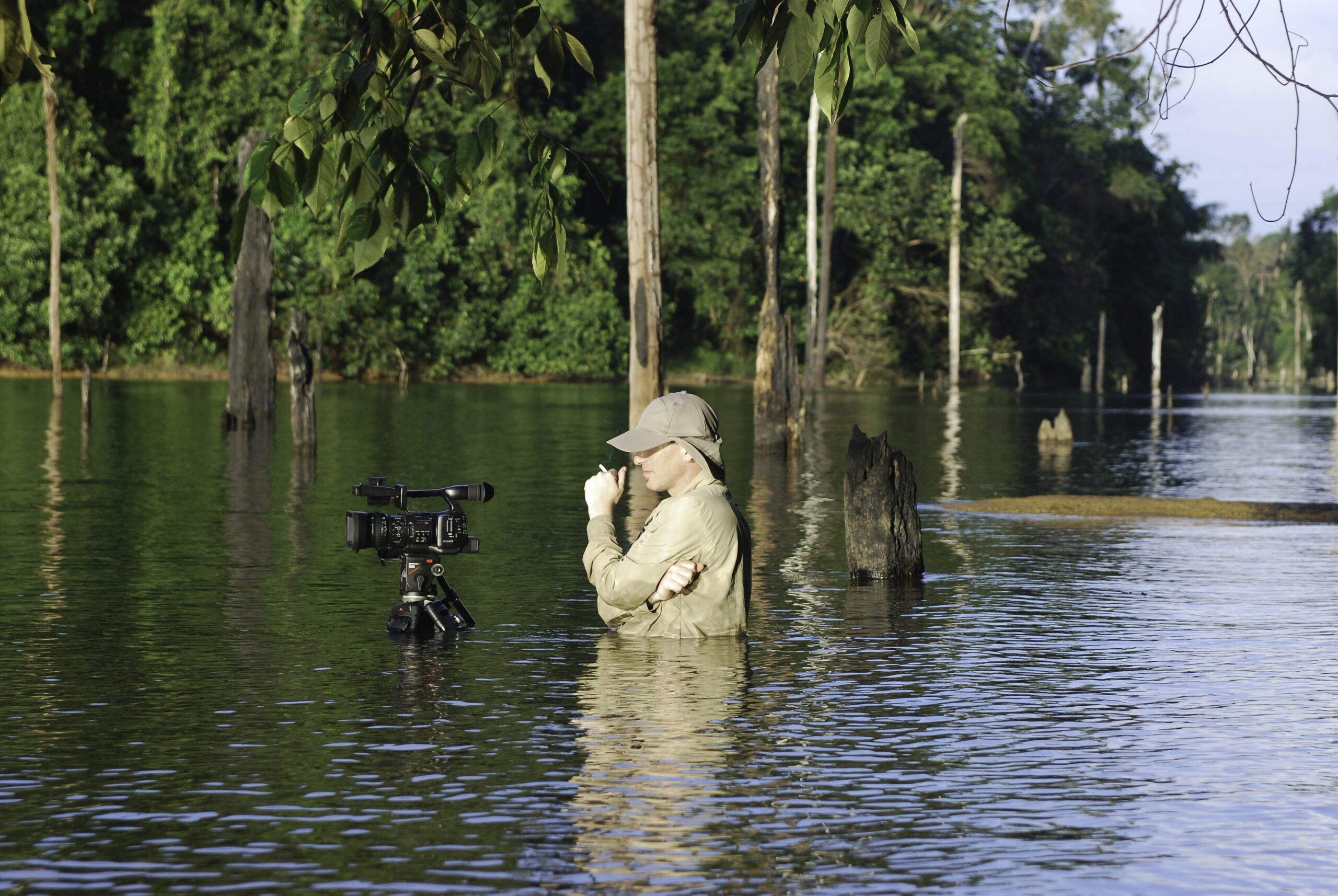
Dead Forest #74, Inkjet Print, 150 cm x 220 cm
Uatumã River, Amazonia, 2009
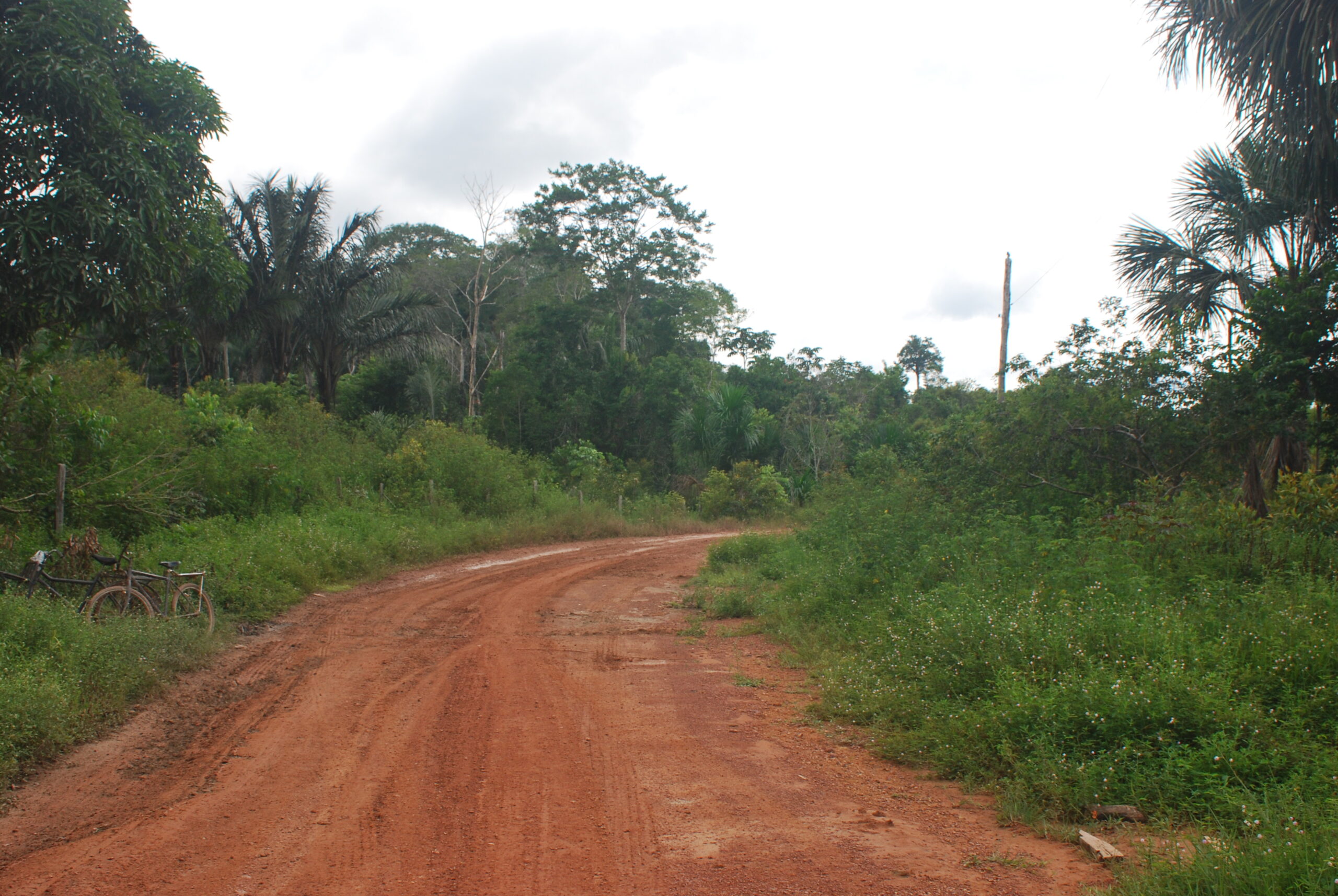
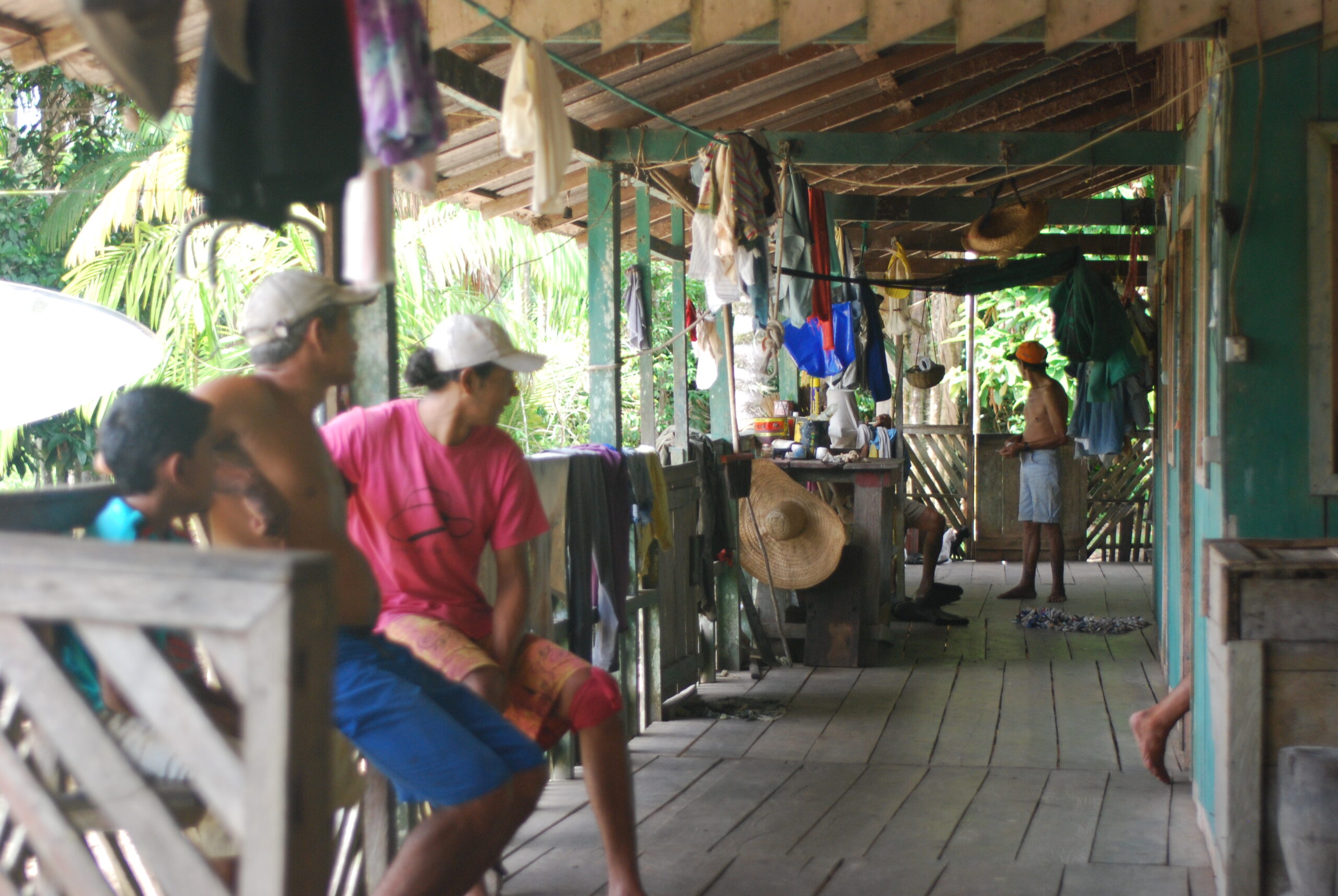
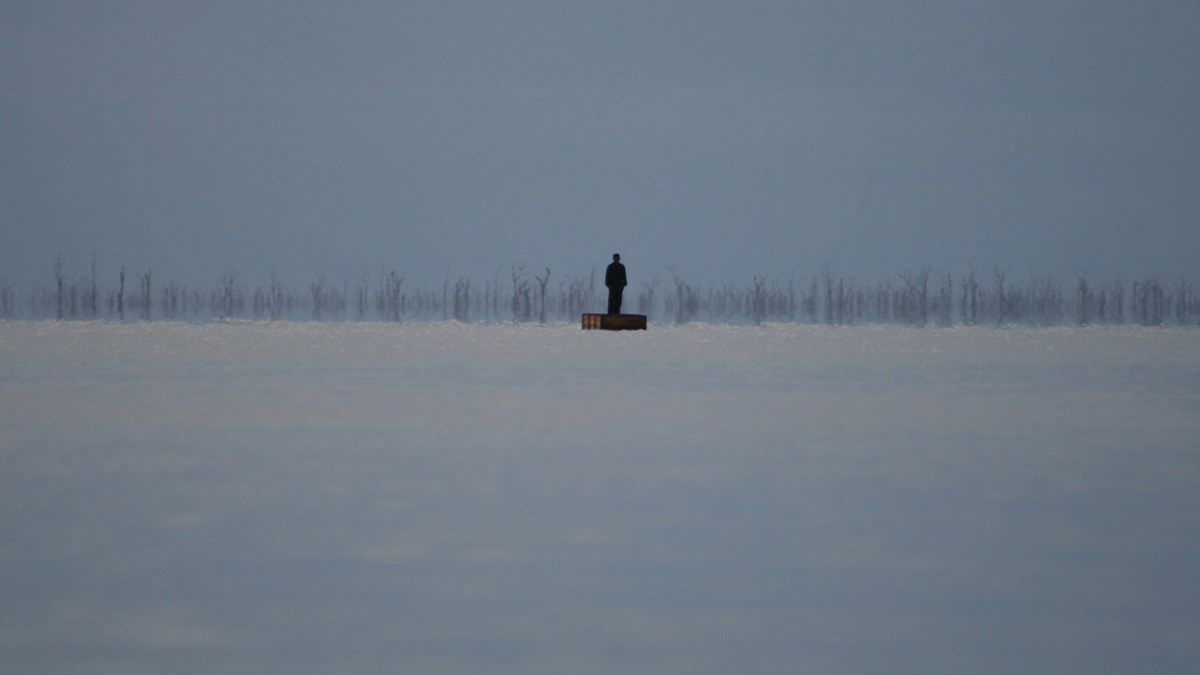
Dead Forest #5749, Inkjet Print, 150 cm x 220 cm
Uatumã River, Amazonia, 2009
Structurally, Dead Forest breaks away from traditional cinematic contemplation through the deliberate insertion of black planes between images. These abrupt visual interruptions, which coincide with the tense instant preceding the sound of thunder, deny the viewer a comfortable gaze, leaving behind the ghost memory of a latent image in the dark. The soundtrack, post-produced by Edgardo Rudnitzky, masterfully translates this environmental tension into a sonic crescendo—gradually shifting from the deceptive tranquility of the flooded forest to a deafening explosion of wind, rain, and thunder. Through this powerful synthesis of visual fracturing and auditory mass, the installation darkens the exhibition space, transforming the gallery into an immersive chamber of historical memory and atmospheric unrest.
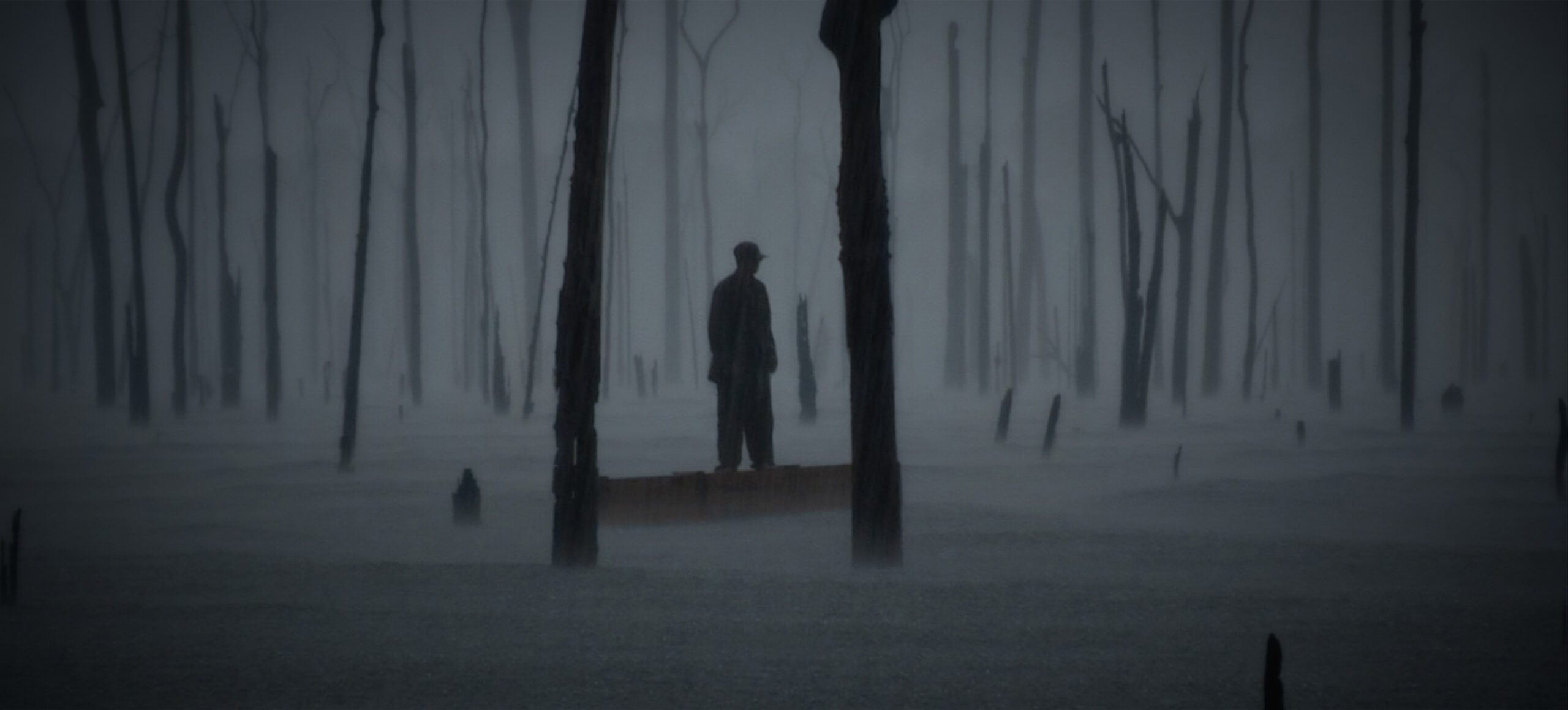
Dead Forest #05, Inkjet Print, 150 cm x 220 cm
Uatumã River, Amazonia, 2009
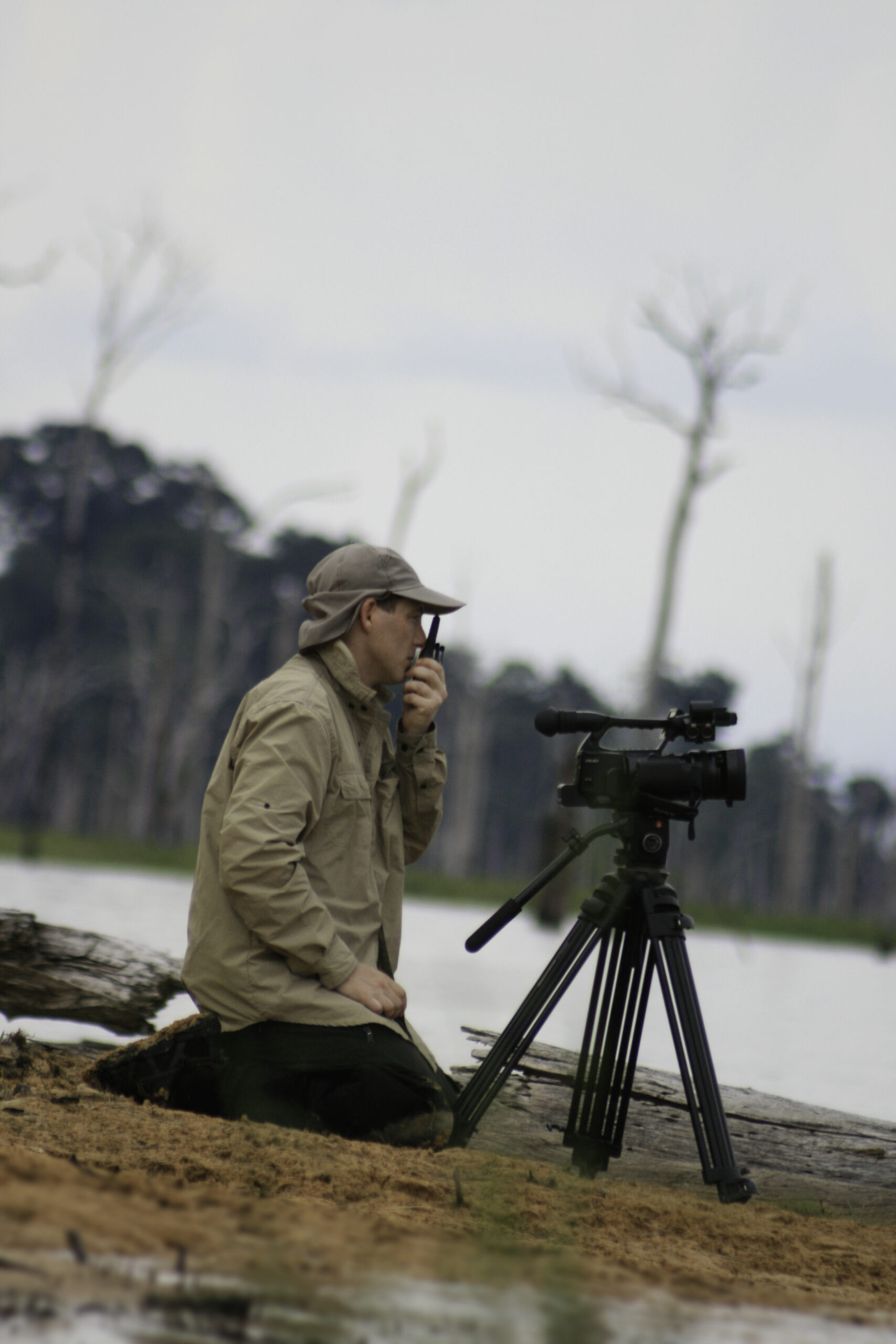
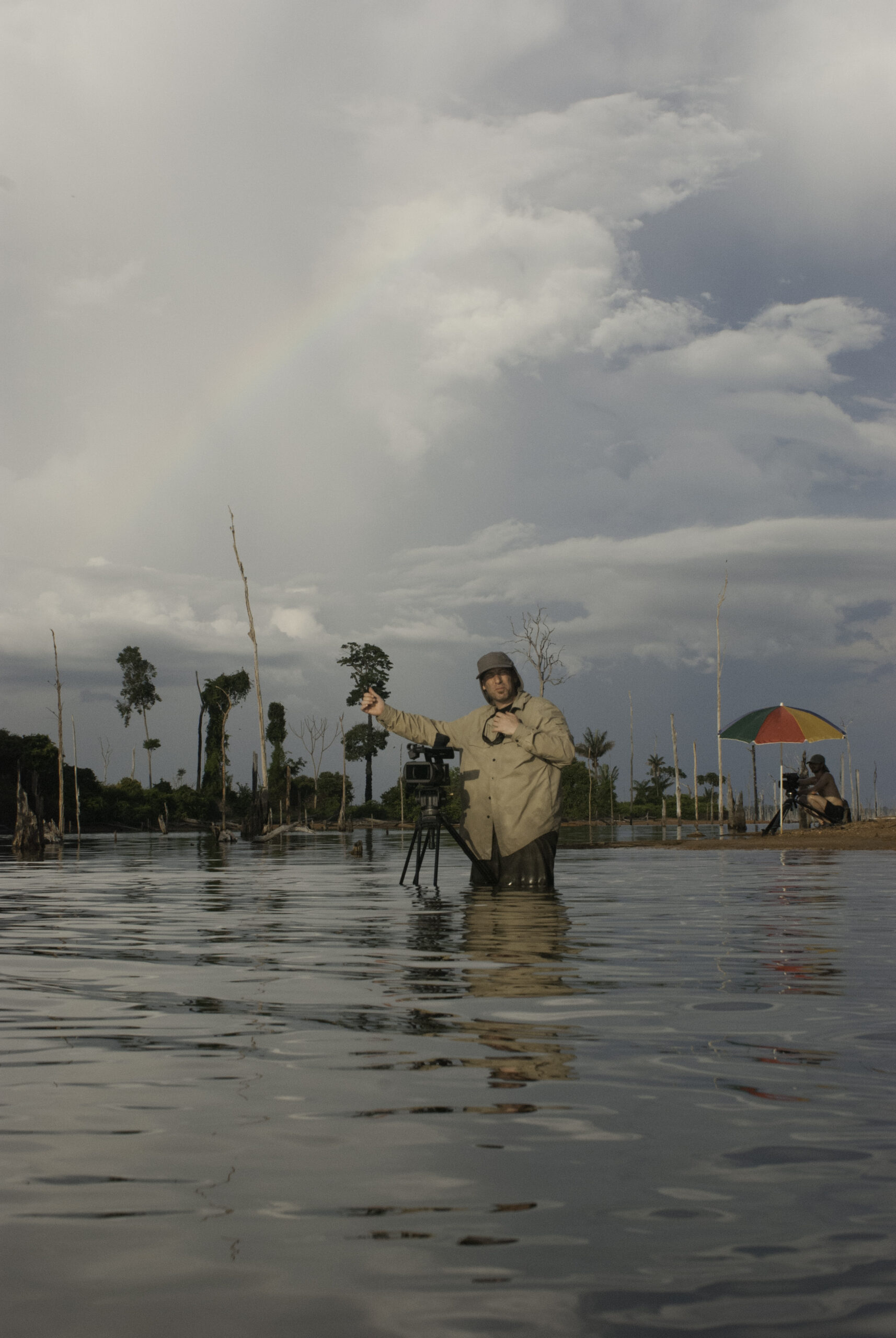
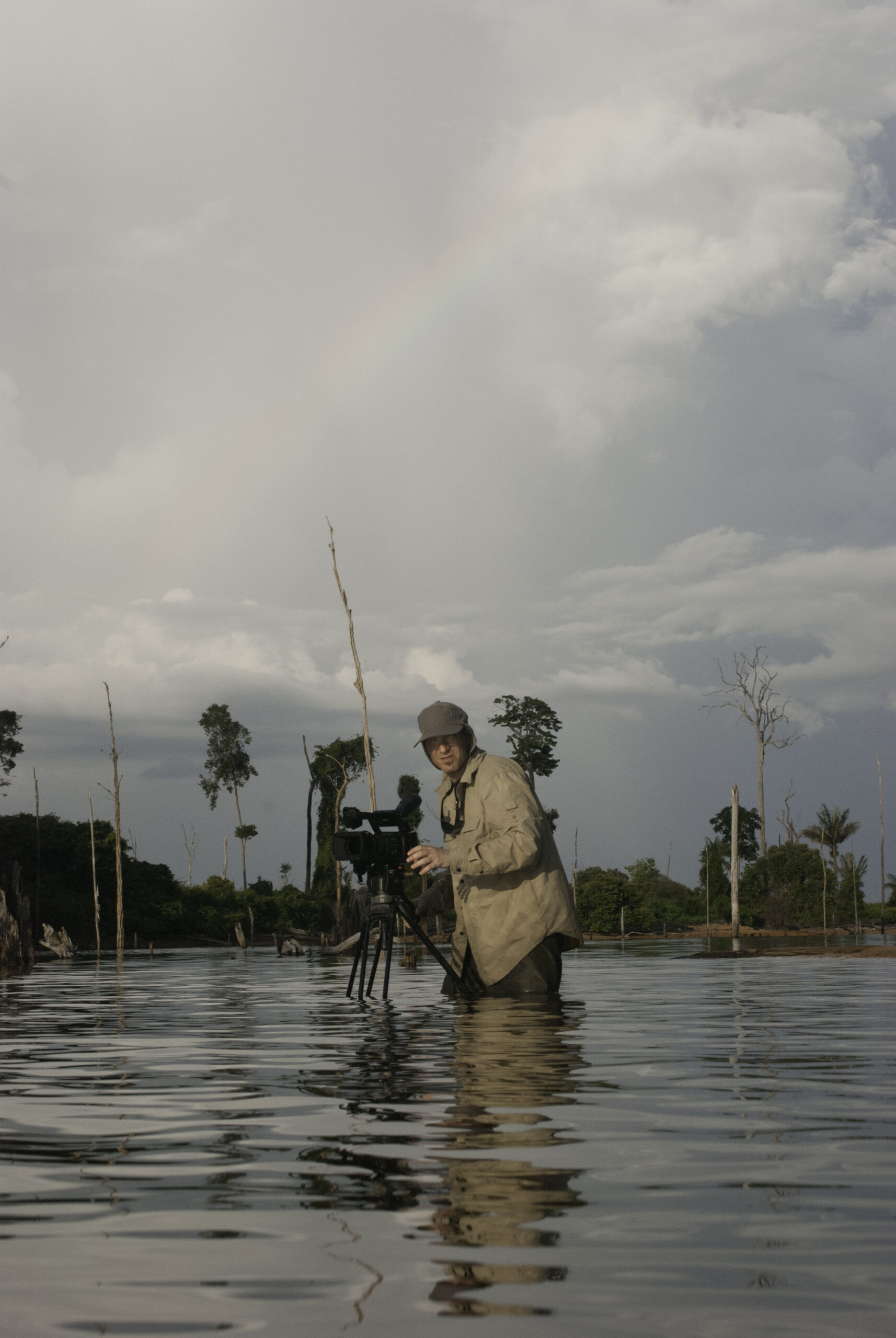
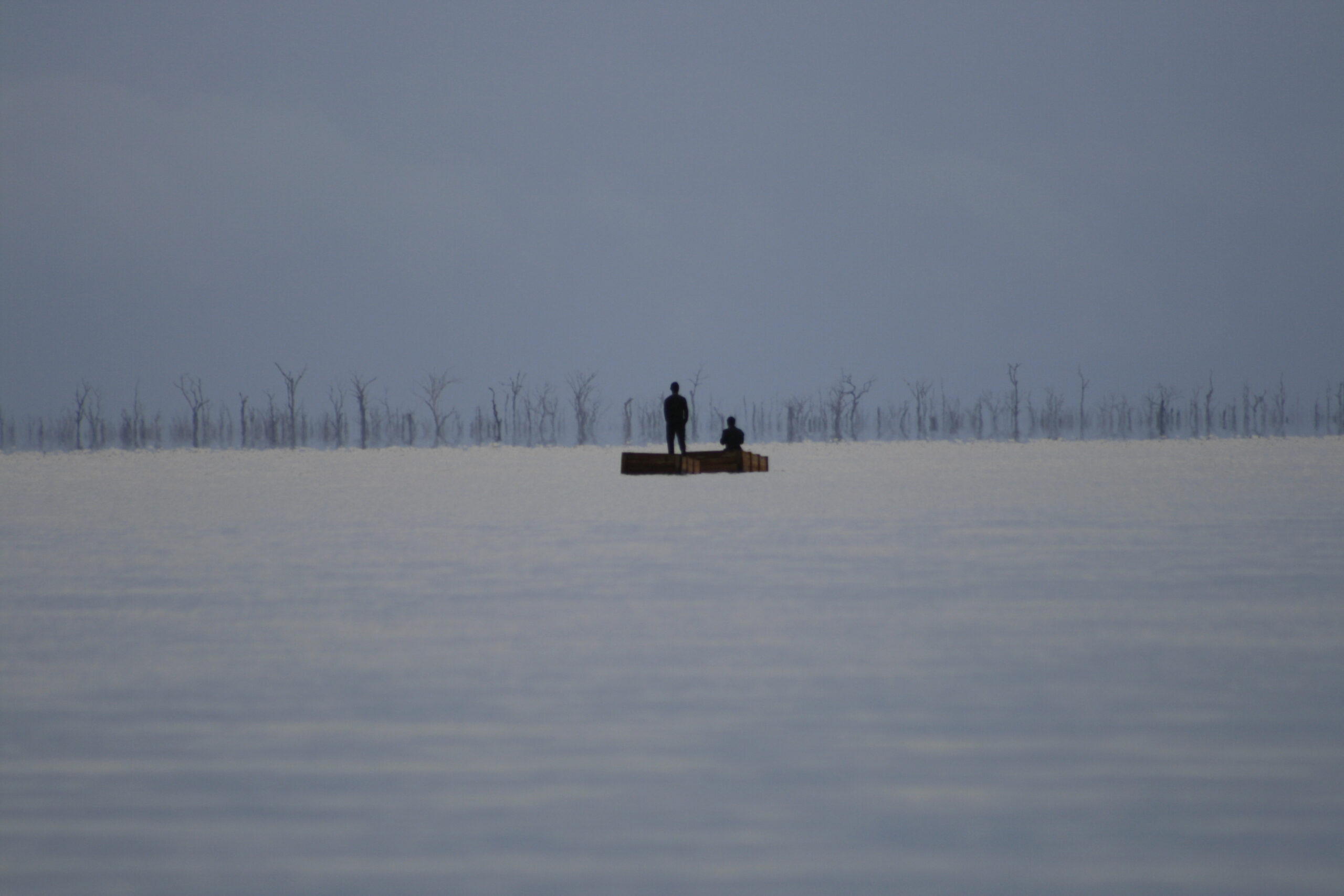
Dead Forest #5756, Inkjet Print, 150 cm x 220 cm
Uatumã River, Amazonia, 2009