Pampas del Zonda
Research Station
Shelters for regional and migratory animals
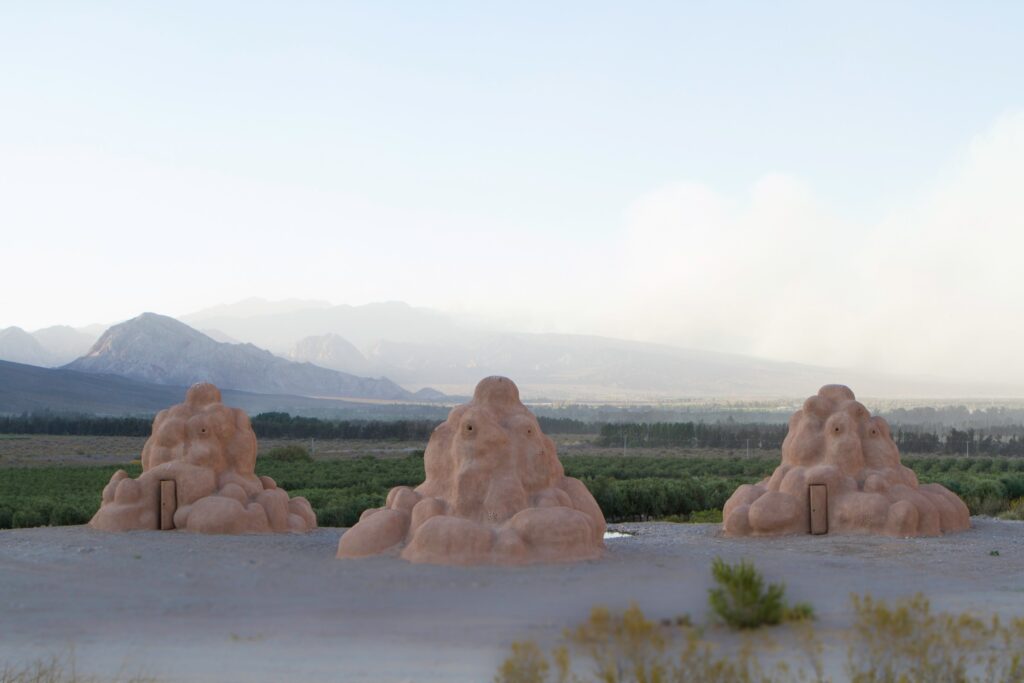
The Pampas del Zonda research station is a land art installation integrated with a network of wild cameras. This system captures and transmits the biological evolution of the environment in real-time, merging artistic form with scientific observation. The station is located in the Zonda Valley, in the Andes Mountains, at approximately 1,200 meters above sea level.
Regeneration Strategies» is a multidisciplinary project developing utopian regeneration strategies in regions where ecosystem biodiversity has been affected by human interference. It’s a network of research stations along different continents, featuring large adobe sculptures designed to provide shelter for regional and migratory animals.
This collaborative project, proposed by Charly Nijensohn, invites scientists, bio- builders, artists, and local communities to develop biotopes using natural elements characteristic of their geography. It’s a network of transcontinental research stations, featuring adobe sculptures designed to provide shelter for regional and migratory animals.
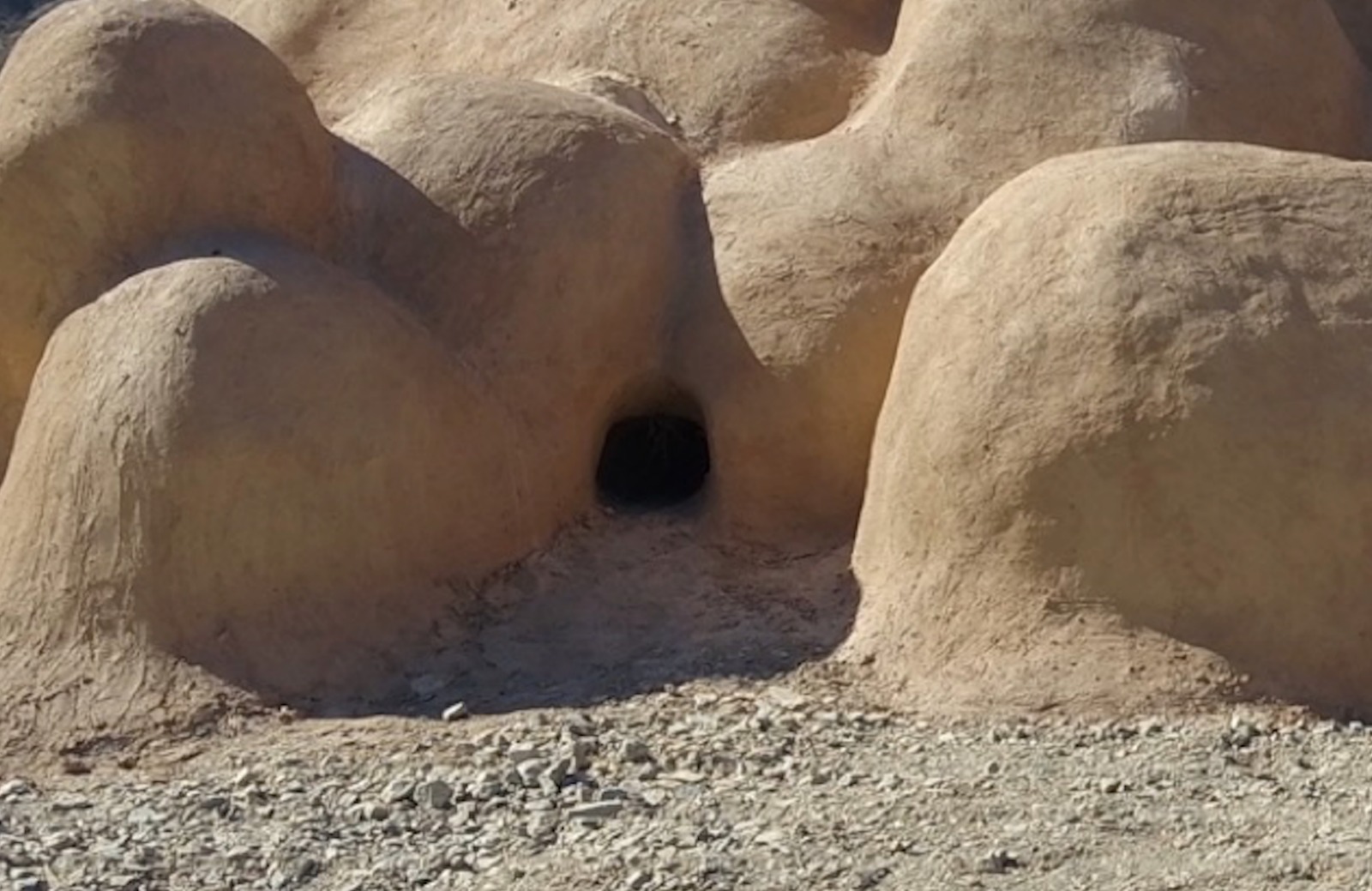
The project features a network of mud tunnels arranged at different heights. While the primary conduits are located at ground level, connecting the base of the structure, other specific tunnels rise higher up, designed exclusively for the transit and shelter of regional birds.
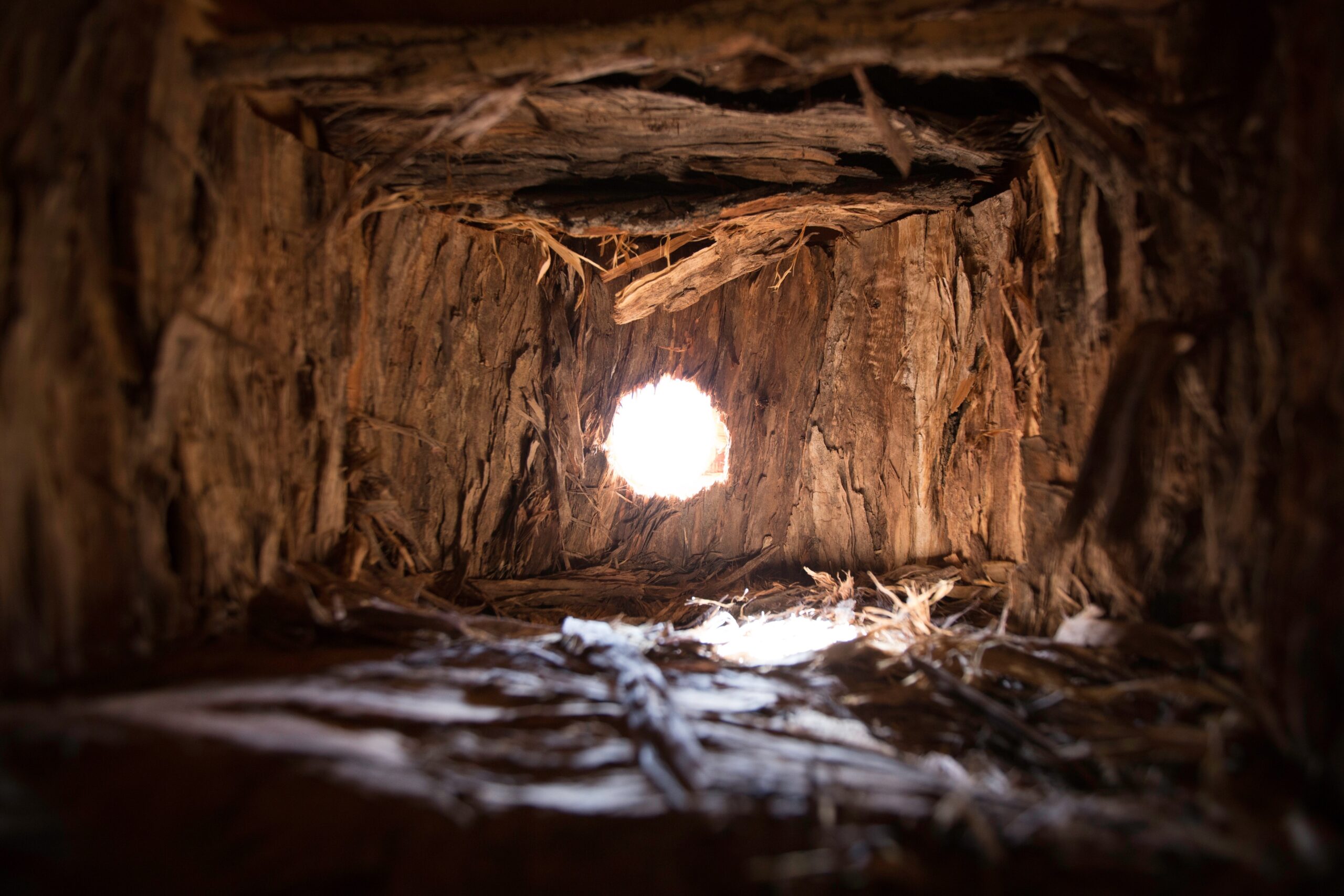
The internal living units, crafted from wood and clad in local bark, work in harmony with these tunnels. This layered organization allows the structure to be more than just a human shelter; it becomes a living organism in dialogue with the different species of the Zonda Valley.
The station operates as a live data hub through a solar-powered camera system strategically placed at tunnel entrances and inside the modules. This system is monitored by Dr. Borghi (CONICET / National University of San Juan), who collects the memory cards each month and uploads them to the university’s digital platform. I download and process this footage in Berlin for two primary purposes: the production of Dr. Borghi’s monthly report for social media, and the creation of the video installation «Das Leben findet seinen Weg».
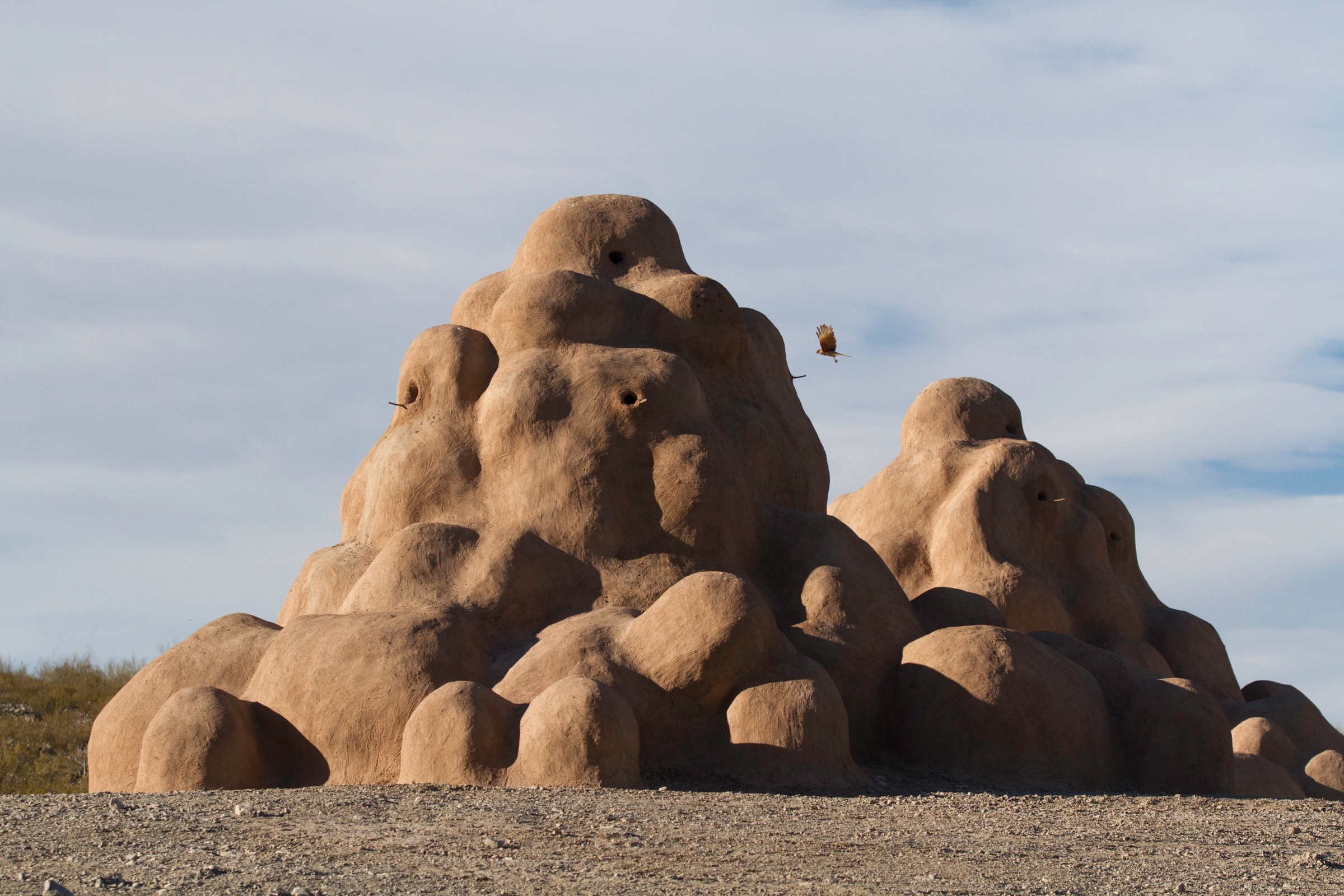
The station operates as a regional sanctuary for migratory animals through a low-impact infrastructure strategically placed in the arid landscape. The shelter is composed of three earthen sculptures—designed to be internally habitable by various local species—and a small water hole that functions as a vital attractant in the desert. This system creates a protected oasis where regional wildlife can find water and nesting grounds, blending contemporary artistic intervention with environmental preservation to support biodiversity within the extreme conditions of the Zonda valley.
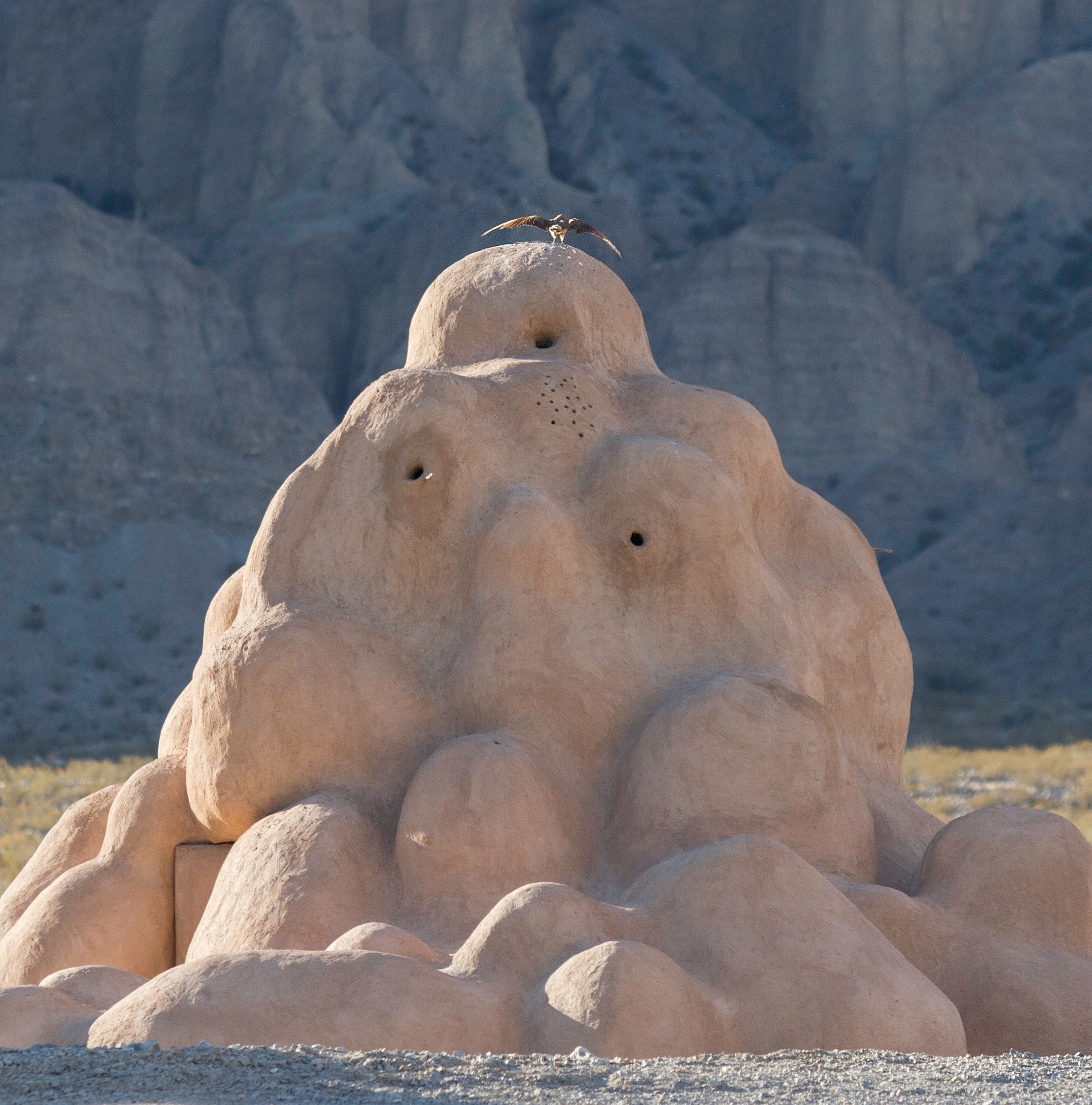
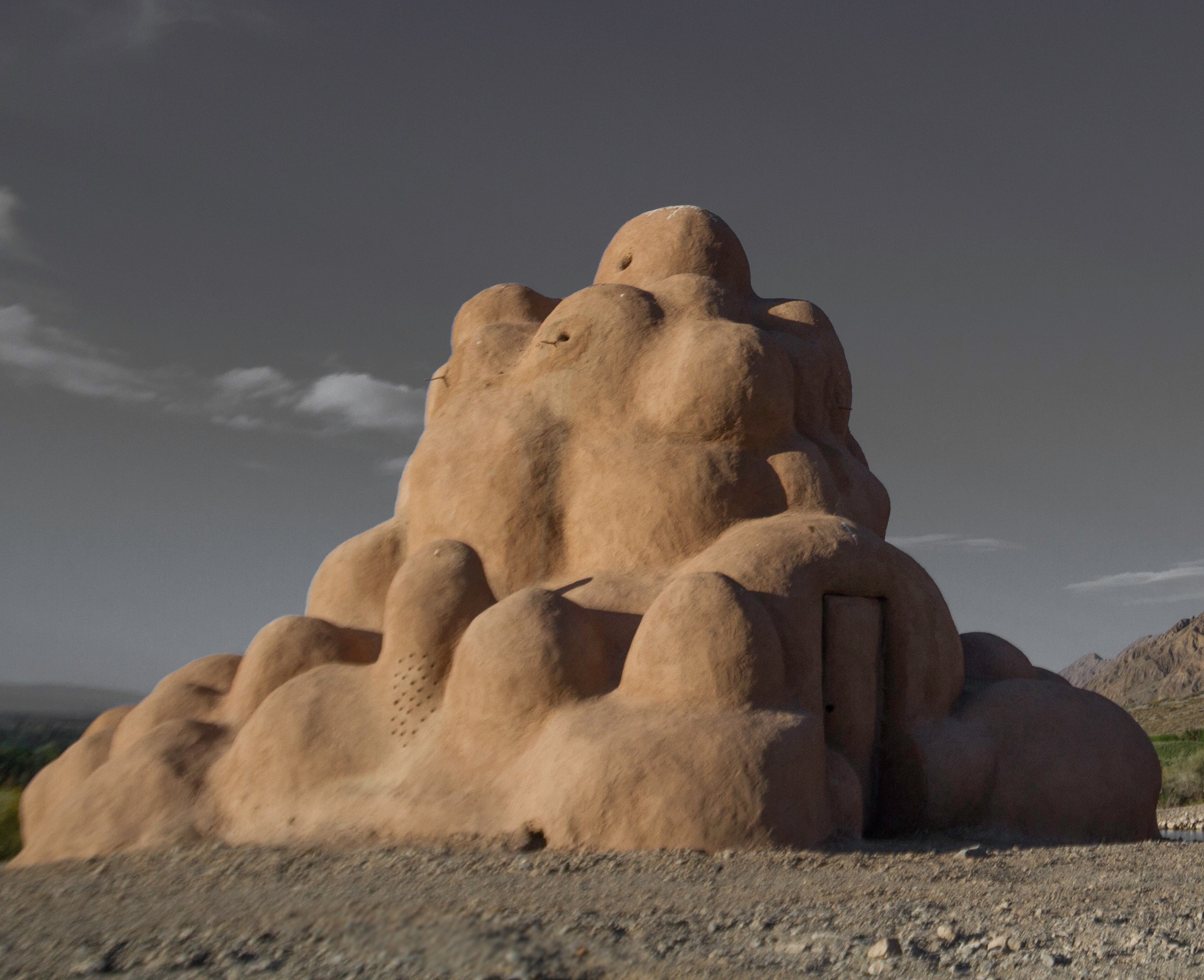
Ensuring the long-term functionality of the internal modules requires regular oversight and cleaning. For this purpose, each earthen sculpture integrates a dedicated access door that allows entry into its interior space without disrupting the surrounding landscape. This design feature permits essential maintenance and optimization for the inhabiting wildlife, balancing a protected, sealed sanctuary for regional fauna with an accessible, operative framework for ongoing ecological research.
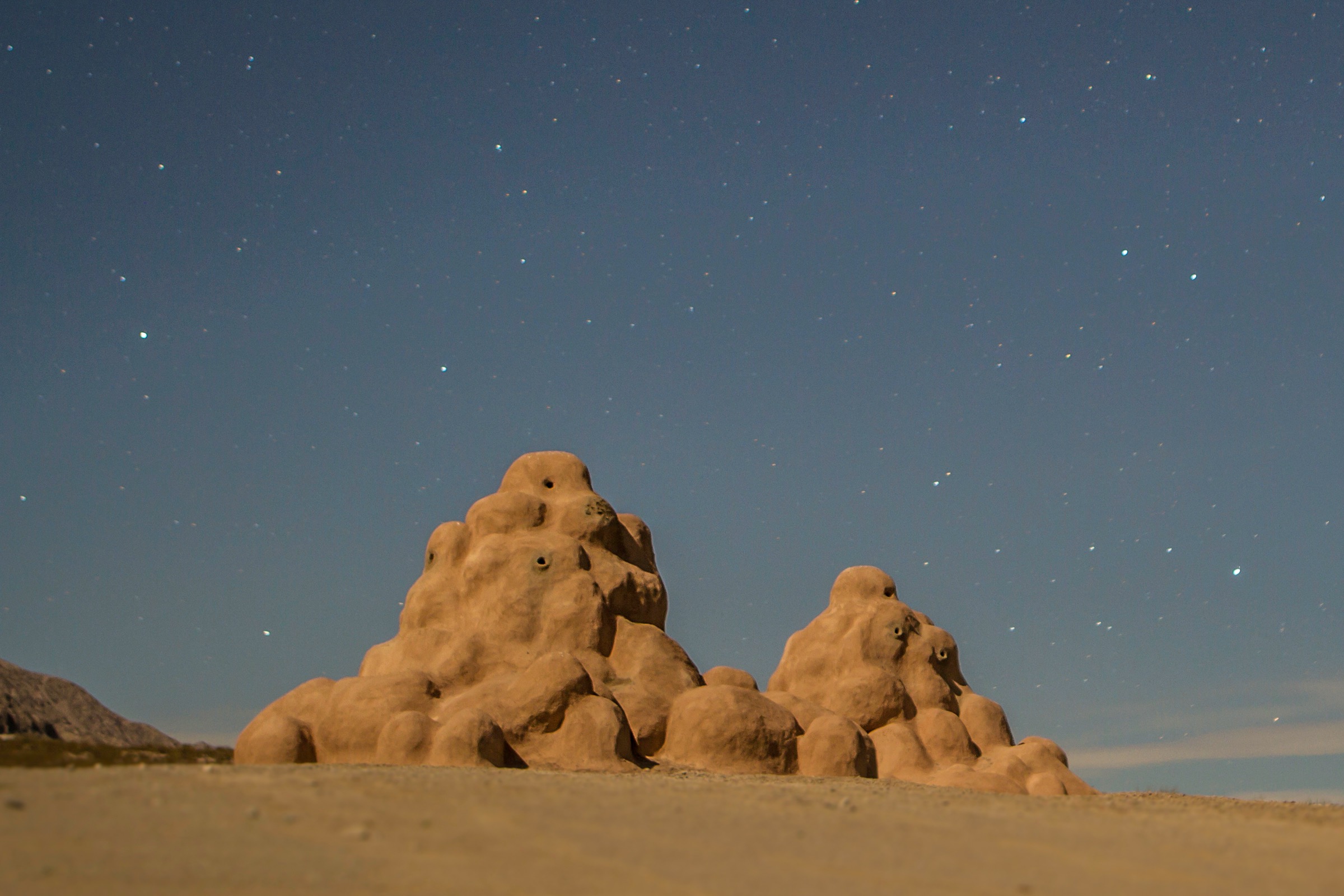
Sourcing raw materials directly from the valley allows the architecture to dissolve into its environment. The fabrication process relies on ancestral mud-building techniques, utilizing local soil and organic binders to shape the structures. This deliberate choice of material not only guarantees a thermal mass ideal for wildlife survival in extreme desert temperatures, but also ensures that the entire infrastructure leaves zero ecological footprint, embodying a sustainable dialogue between contemporary art and vernacular craftsmanship.